There are cities like Aurangabad that carry the weight of history gracefully, like an old shawl worn soft with time. The Aurangabad tourist places are not simply monuments on a map; they are conversations between centuries, between faiths, between the hands of artists who carved prayers into rock and emperors who built love into stone. This city in Maharashtra holds two UNESCO World Heritage Sites, a Mughal-era monument that mirrors the Taj Mahal, and a fort that once seemed unconquerable. To visit Aurangabad is to walk through layers of India that most cities have long since buried.
If you are planning a trip to Aurangabad and wondering where to begin, read till the end. This guide covers everything from the finest cave temples in the world to quiet lakes that ask for nothing but your company.
Top Tourist Attractions to Explore in Aurangabad
Aurangabad rewards travellers who give it proper time. The city's sights are spread across different moods; some demand reverence, some invite wonder, some simply offer a place to breathe. Together, the places to visit in Aurangabad form one of the richest heritage circuits in all of India.
Ajanta Caves
Ajanta is not a tourist attraction in the ordinary sense. It is a revelation. Carved into a horseshoe-shaped cliff above a river gorge, these 30 rock-cut Buddhist caves were created between the 2nd century BCE and the 6th century CE. The paintings inside, depicting the Jataka tales of the Buddha's past lives, are considered among the finest surviving examples of ancient Indian art anywhere in the world.
The colour, expression, and narrative detail in these murals have survived over a millennium. A morning at Ajanta changes the way you see ancient India.
Ellora Caves
Ellora takes everything Ajanta offers and adds an almost impossible ambition. These 34 caves, Buddhist, Hindu, and Jain, were carved between the 6th and 11th centuries, and the centrepiece is the Kailasa Temple: a complete, freestanding temple carved downward from a single rock. As one of the region’s most extraordinary heritage attractions, Ellora is a highlight of many Aurangabad tour packages, drawing travellers from around the world to witness its remarkable artistry and engineering.
Among all the Aurangabad tourist attractions, Ellora is the one that consistently leaves visitors struggling to find words.
Bibi Ka Maqbara
Built by Mughal Prince Azam Shah in memory of his mother, Bibi Ka Maqbara is often called the Taj of the Deccan. The resemblance to the Taj Mahal is intentional, though the materials and scale differ. The gardens, reflecting pool, and white marble dome make it one of the most visited Aurangabad tourist spots and a beautiful place to spend a slow morning.
Daulatabad Fort
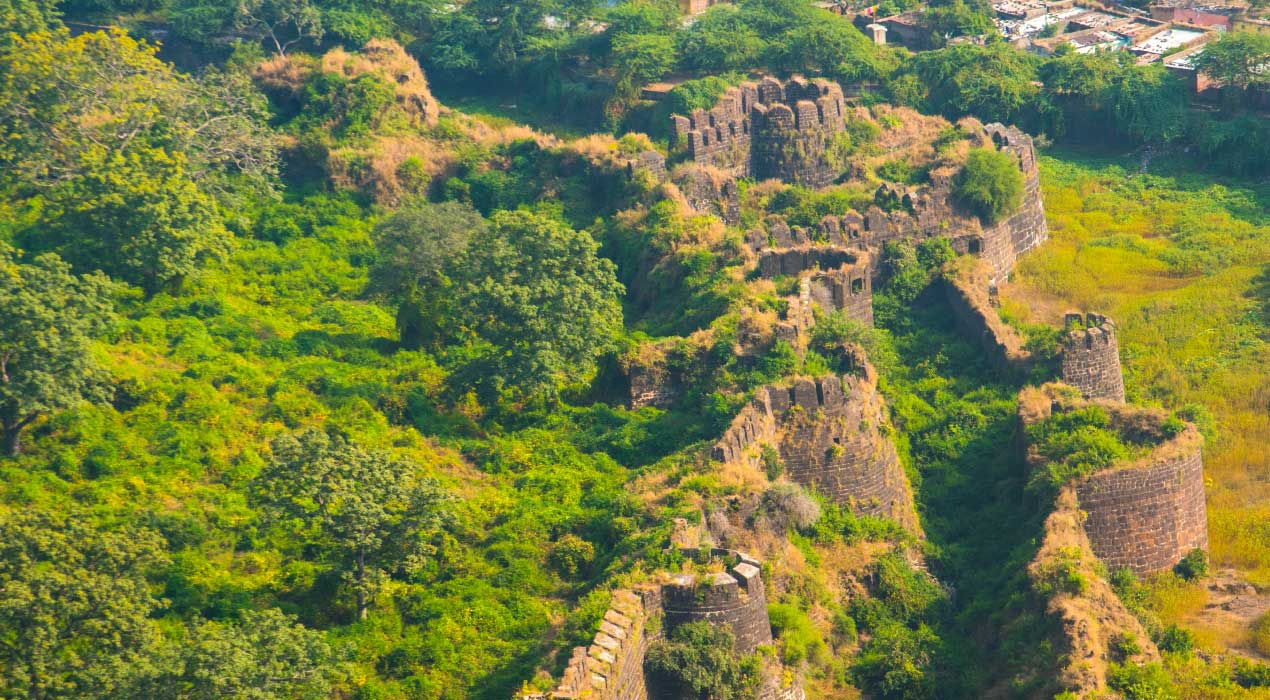
Daulatabad Fort is atop a 200-metre volcanic cone and was once considered impregnable, and with good reason. The approach involves a narrow tunnel cut through solid rock, a pitch-dark labyrinth built to confuse attackers, and steep fortified walls. The views from the top stretch across the Deccan plains for miles.
It is one of the most dramatically situated places to see in Aurangabad and one of the finest medieval forts in India.
Grishneshwar Jyotirlinga Temple
Located near Ellora, the Grishneshwar Temple is one of the twelve Jyotirlingas of Shiva, among the most sacred Shiva shrines in Hinduism. The temple complex is active, architecturally significant, and spiritually charged.
For pilgrims, this is one of the most important tourist places to visit in Aurangabad. For all visitors, it is a deeply human place where faith feels very close to the surface.
Panchakki
Panchakki, meaning water mill, was built in the 17th century as part of a Sufi dargah complex dedicated to the saint Baba Shah Musafir. The mill was powered by an underground channel that still flows today. The garden, tank, and old trees around the complex give it a calm, contemplative character.
Aurangabad Caves
Often overshadowed by Ajanta and Ellora, the Aurangabad Caves are a quieter, more personal experience. These rock-cut Buddhist caves contain some beautifully carved figures, and the relative absence of crowds makes them ideal for unhurried exploration.
Siddharth Garden & Zoo
A well-maintained public garden with a small zoo, Siddharth Garden is one of the more relaxed places of interest in Aurangabad for families and those who want a slower afternoon. The medieval water mill near the entrance adds a historical dimension to what is otherwise a green, restful space.
Jayakwadi Dam
One of the largest earthen dams in India, Jayakwadi on the Godavari River, creates a wide reservoir landscape that is particularly beautiful during winter when migratory birds arrive in significant numbers. It offers a completely different, open-air experience from the cave circuits.
Salim Ali Lake
Named after the legendary Indian ornithologist, Salim Ali Lake is a birding destination close to the city. It attracts a range of resident and migratory birds and offers a peaceful, natural contrast to the historical weight of the cave sites.
Historical & Heritage Attractions in Aurangabad
Aurangabad carries history across multiple civilisations and faiths, and the Aurangabad sightseeing places reflect this diversity. No single era defines the city; it is the accumulation of layers that makes it extraordinary.
UNESCO World Heritage Sites
Both Ajanta and Ellora carry UNESCO World Heritage status, and they represent two of India's greatest contributions to world art and architecture. Together, they make Aurangabad the only city in India within comfortable reach of two separate UNESCO sites, which is reason enough to place it firmly on any heritage-focused itinerary.
Check out this guide to the UNESCO-listed places in India that you must visit once.
Mughal-Era Monuments & Forts
Bibi Ka Maqbara, Daulatabad Fort, and Panchakki all reflect different aspects of Mughal presence and influence in the Deccan. These attractions in Aurangabad are architectural statements of power and engineering ingenuity.
Spiritual & Cultural Landmarks
Grishneshwar Temple anchors the city's spiritual identity for Hindu visitors. Dargah of Baba Shah Musafir speaks to Aurangabad's deep Sufi heritage. The coexistence of these traditions in one city is one of Aurangabad's most underappreciated qualities.
Best Time to Visit Aurangabad
Choosing your season wisely affects both comfort and experience. The places to visit in Aurangabad span large outdoor areas, and the heat or rain can significantly change how much time you can spend at each site.
|
Season
|
Months
|
Temperature
|
What to Expect
|
|
Winter
|
October - February
|
10°C - 28°C
|
Best time: clear skies, comfortable sightseeing
|
|
Monsoon
|
July - September
|
22°C - 32°C
|
Lush greenery, caves, and forts gain atmosphere
|
|
Summer
|
March - June
|
28°C - 42°C
|
Hot; early morning visits advisable; fewer crowds
|
Winter Season for Sightseeing
October to February is undoubtedly the best window. Temperatures are comfortable, mornings are crisp, and the full days allow you to cover cave sites, forts, and monuments without fatigue. Winter is when Aurangabad is at its most welcoming.
Monsoon Travel Experiences
July to September brings rain, green landscapes, and a dramatic quality to the cave gorges at Ajanta. The falls and streams around Ellora run beautifully. Outdoor fort visits can be slippery, but the atmosphere has a moody, cinematic quality that some travellers actively seek.
Summer Travel Tips for Aurangabad
March to June is warm and, in peak months, genuinely hot. The caves themselves stay cool inside, making Ajanta and Ellora still manageable with early starts. Outdoor sightseeing, like Daulatabad Fort, is best done before 9 AM and after 4 PM.
How to Reach Aurangabad
Aurangabad is well connected by air, rail, and road. Most travellers from major Indian cities find at least one convenient option.
By Air
Chikkalthana Airport has flights connecting to Mumbai, Delhi, and Hyderabad. It is the most convenient entry point for travellers on shorter schedules.
By Train
Aurangabad Railway Station has good connectivity. Several express trains make the journey comfortable and affordable.
By Road
National Highway connections from Mumbai, Pune, and Hyderabad make road travel practical. Both private cabs and buses run regularly on these routes.
Where to Stay in Aurangabad
Accommodation in Aurangabad has grown steadily to match the city's tourism profile. Whether you want a simple base or a comfortable retreat, there are good options across all categories.
Budget Hotels & Comfortable Stays
Budget properties in the city centre offer easy access to local restaurants and transport. They work well for travellers focused on spending their time outdoors.
Premium Hotels & Business Stays
Mid-range and business hotels offer better facilities. These are a good fit for families and couples who want consistent quality.
Luxury Hotels & Resorts
Luxury properties near Aurangabad combine modern comforts with generous spaces. They work particularly well for travellers who want to balance sightseeing with genuine rest.
Experiences by Travel Interest in Aurangabad
Aurangabad works for many kinds of travellers, and the Aurangabad sightseeing places can be grouped by interest to help you prioritise a plan that matches what you actually want from the trip.
Heritage & Architecture Experiences
- Ajanta Caves for ancient Buddhist art and painting.
- Ellora Caves for the greatest rock-cut architecture in the world.
- Daulatabad Fort for medieval military engineering.
- Bibi Ka Maqbara for Mughal grace in the Deccan.
Family-Friendly Tourist Attractions
- Siddharth Garden & Zoo for a relaxed afternoon.
- Jayakwadi Dam for open landscapes and birdwatching.
- Salim Ali Lake for a nature break between heritage visits.
- Aurangabad Caves for a quieter, crowd-free experience.
Spiritual & Cultural Experiences
- Grishneshwar Jyotirlinga for one of Hinduism's most sacred pilgrimage sites.
- Panchakki for Sufi heritage and a historically moving dargah complex.
- Ellora Caves for the coexistence of Buddhist, Hindu, and Jain traditions in a single site.
Places to Visit Near Aurangabad
Aurangabad is at the centre of a region rich with significant destinations. Adding even one or two places to visit near Aurangabad creates a much fuller Maharashtra journey.
The surrounding area offers pilgrimage centres, natural wonders, and major cities, each within manageable driving distance.
Shirdi
Shirdi, home to the Sai Baba Shrine, is approximately 130 kilometres from Aurangabad. It is one of the most visited pilgrimage sites in India, and many travellers combine it naturally with an Aurangabad heritage trip.
Nashik
Nashik is known for the Kumbh Mela, its Ramkund ghats on the Godavari, and a growing wine trail through surrounding vineyards. It adds both spiritual and leisure dimensions to a longer Maharashtra itinerary.
Pune
Pune is Maharashtra's second city: dynamic, historical, and well-equipped for travellers. The Aga Khan Palace, Shaniwarwada Fort, and the Osho Ashram are among its draws. It also serves as a departure point for many international visitors. For those looking to explore the city in greater depth, Pune tour packages offer a convenient way to experience its blend of history, culture, spirituality, and modern urban life.
Lonar Crater Lake
Lonar is one of the oldest and most unique natural features in India, a meteor crater lake estimated at 52,000 years old. The lake has a striking colour, and ancient temples sit along its rim. It is one of the most unusual places to visit near Aurangabad and deeply rewarding for scientifically or historically curious travellers.
Frequently Asked Questions
What is the best time to visit Aurangabad?
October to February is the most comfortable and recommended season for all Aurangabad tourist attractions, offering pleasant weather and full sightseeing days.
What is Aurangabad famous for?
It is famous for the Ajanta and Ellora Caves and the Grishneshwar Jyotirlinga. It is one of India's most significant heritage destinations.
Is 3 days enough to explore Aurangabad?
Three days comfortably cover Ajanta, Ellora and Bibi Ka Maqbara. Four days allow a more relaxed pace.
What are the best places to visit in Aurangabad?
Daulatabad Fort and Grishneshwar Temple are the essential Aurangabad sightseeing places for any itinerary.
Which is better, Ajanta or Ellora?
They are different rather than comparable. Ajanta excels in painting and narrative art; Ellora excels in sculptural architecture, particularly the Kailasa Temple. If you can only visit one, most historians recommend Ellora for its architectural scale.
What are the top things to do in Aurangabad for tourists?
Visit the cave complexes, explore the fort, attend morning puja at Grishneshwar, and take a day trip to Lonar.
Which religious places are popular in Aurangabad?
Grishneshwar Jyotirlinga and Panchakki Dargah are the most significant tourist places to visit in Aurangabad for pilgrims.
Are the Ajanta and Ellora Caves worth visiting together?
Together, they represent the full spectrum of ancient Indian rock-cut art and architecture across Buddhist, Hindu, and Jain traditions.