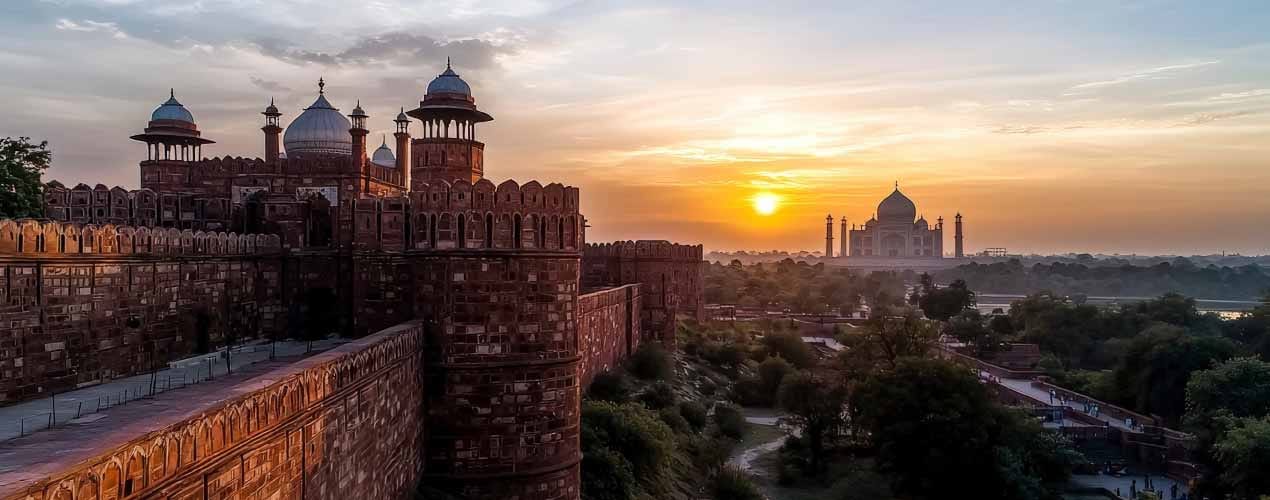
The city is one of India’s most loved heritage destinations and is perfect for families, couples, history lovers and first-time travellers.
Most Agra tourist places can be covered in two days if your plan is simple and well-timed. Start early for the Taj Mahal, keep afternoons for indoor or shaded spots and use evenings for Mehtab Bagh, markets and local food.
Top Tourist Attractions to Explore in Agra
Agra has a mix of world-famous monuments, quiet Mughal gardens, old tombs and cultural spaces. These attractions give travellers a complete view of the city beyond just the Taj Mahal.
Taj Mahal
The Taj Mahal is Agra’s most famous monument and one of the finest symbols of love in the world, often included in Agra tour packages. Built by Mughal emperor Shah Jahan in memory of Mumtaz Mahal, it is known for its white marble, fine inlay work and peaceful gardens.
Agra Fort
Agra Fort is a grand red sandstone fort that once served as an important Mughal residence. Inside, you can see palaces, courtyards, halls and views of the Taj Mahal from selected points. It is one of the top attractions in Agra for travellers who enjoy history and architecture.
Fatehpur Sikri
Fatehpur Sikri is a historic city built by Emperor Akbar. It is around an hour from Agra and is known for Buland Darwaza, Jama Masjid, Panch Mahal and royal courtyards. Keep comfortable footwear, as the complex needs slow walking.
Mehtab Bagh
Mehtab Bagh sits across the Yamuna River and gives a beautiful view of the Taj Mahal from the opposite side. It is ideal for photography, sunset views and quiet time away from heavy crowds.
Itimad-ud-Daulah’s Tomb
Often called the Baby Taj, this tomb is known for its delicate marble work and detailed carvings. It is smaller than the Taj Mahal, but its calm setting makes it one of the charming places to see in Agra.
Jama Masjid
Jama Masjid is a historic mosque near Agra Fort and the old city market area. Its red sandstone structure and busy surroundings give travellers a glimpse of local life.
Akbar’s Tomb
Akbar’s Tomb in Sikandra is a peaceful site with wide gardens and Indo-Islamic architecture. It is a good stop for travellers who want to understand the Mughal story beyond the Taj Mahal.
Chini Ka Rauza
Chini Ka Rauza is known for glazed tile work and Persian influence. It is quieter than the main monuments and suits travellers who like less crowded heritage corners.
Wildlife SOS Bear Rescue Centre
Wildlife SOS Bear Rescue Centre near Agra is known for its work with rescued sloth bears. Visits usually need advance booking, so check the official process before planning.
Anguri Bagh
Anguri Bagh is a lovely garden inside the Agra Fort. The geometric garden design reflects Mughal taste and is a peaceful pause during the fort visit.
Mughal Heritage & Cultural Attractions in Agra
Agra’s heritage is closely linked with Mughal rulers, fine marble work, red sandstone buildings and garden-style architecture. These places show why the city remains one of India’s strongest cultural destinations.
UNESCO World Heritage Sites
Agra has three UNESCO World Heritage Sites nearby: Taj Mahal, Agra Fort and Fatehpur Sikri. These are the most important places of interest in Agra for heritage travellers and should be given enough time.
Mughal Architecture & Historic Monuments
Agra’s monuments show fine marble work, red sandstone, arches, domes, gardens and detailed carvings. Taj Mahal, Agra Fort, Itimad-ud-Daulah, Akbar’s Tomb and Chini Ka Rauza together show how Mughal design changed across different rulers.
Gardens, Markets & Local Experiences
Agra is also known for petha, marble souvenirs, leather goods, handicrafts and Mughlai food. Sadar Bazaar, Kinari Bazaar and local craft lanes are good for shopping. For more heritage ideas, you can read SOTC’s blog on UNESCO-listed places in India.
Best Time to Visit Agra
Agra can be visited throughout the year, but the experience changes with each season. Winter is the most comfortable time, while monsoon and summer require a slightly slower travel plan.
Winter Season for Sightseeing
October to March is the best time to visit Agra. The weather is cooler, walking around monuments feels easier, and sunrise visits are more pleasant. December and January can have fog, so keep some flexibility in your plan.
Monsoon Travel Experiences in Agra
July to September brings light freshness to gardens and river views. Crowds may be lower than peak winter, but rain can affect walking plans. Carry an umbrella and choose shoes that are comfortable on wet paths.
Summer Travel Tips for Agra
April to June can be very hot. Start sightseeing early, rest in the afternoon and keep evenings for Mehtab Bagh or markets. Carry water, sunglasses and a cap, especially when visiting large monument complexes.
|
Season
|
Best For
|
Travel Tip
|
|
October to March
|
Heritage walks and sightseeing
|
Book sunrise Taj Mahal visits early
|
|
July to September
|
Gardens and lighter crowds
|
Carry rain protection
|
|
April to June
|
Short budget trips
|
Avoid afternoon outdoor sightseeing
|
How to Reach Agra
Agra can be visited throughout the year, but the experience changes with each season. Winter is the most comfortable time for sightseeing, while monsoon and summer require a slower travel plan.
By Air
Agra has an airport, but flight options may be limited. Many travellers fly to Delhi and continue to Agra by road or train because Delhi has better domestic and international connectivity.
By Train
Agra is well connected by train to Delhi, Jaipur, Lucknow, Gwalior, Bhopal and other cities. Agra Cantt is the main railway station for most travellers.
By Road
Agra is easy to reach by road from Delhi through the Yamuna Expressway. It also connects well with Jaipur, Mathura, Vrindavan and Lucknow. For a wider North India plan, SOTC’s India tour packages can be useful.
Where to Stay in Agra
Agra has stay options for every kind of traveller, from simple hotels to premium Taj view properties and luxury resorts. Choose your stay based on your sightseeing plan, budget and travel style.
Budget Hotels & Comfortable Stays
Budget hotels and simple guest stays are available near Taj Ganj, railway station areas and main city roads. These work well for short trips and family travel.
Premium Hotels with Taj Mahal Views
Some premium hotels offer Taj Mahal views from rooms, terraces or restaurants. These are popular with couples and travellers celebrating special occasions.
Luxury Hotels & Heritage Resorts
Luxury hotels and heritage-style resorts offer fine dining, spa options, curated experiences and relaxed stays. Choose these if you want your Agra trip to feel slower and more comfortable.
Experiences by Travel Interest in Agra
Agra can be planned in different ways depending on who you are travelling with. Couples, families and heritage lovers can all enjoy the city, but the pace and choice of places should be planned carefully.
Romantic Places to Visit in Agra for Couples
The Taj Mahal, Mehtab Bagh, and Yamuna River views and premium rooftop dining spots are good places to visit in Agra for couples. Sunrise and sunset hours feel more special and less tiring.
Family-Friendly Tourist Attractions
Families can visit the Taj Mahal, Agra Fort, Fatehpur Sikri, Akbar’s Tomb, Mehtab Bagh and Wildlife SOS. Keep snack breaks and avoid packing too many monuments into one day.
Heritage Walks & Cultural Experiences
Try a guided heritage walk, old market visit, craft shopping or food trail. SOTC’s blog on famous historical places in India can also give ideas for a larger heritage holiday.
Places to Visit Near Agra
Here are some of the best and most renowned places to visit near Agra with family and friends:
Mathura
Mathura is one of the most popular tourist places near Agra, especially for spiritual travellers. It is linked with Lord Krishna and is known for temples, ghats and festive energy. You can explore SOTC’s Mathura Vrindavan tour packages for a planned short trip.
Vrindavan
Vrindavan is close to Mathura and is famous for the Banke Bihari Temple, Prem Mandir, ISKCON Temple and Holi celebrations. It is one of the best places near Agra to visit if you enjoy temple towns.
Jaipur
Jaipur is a popular extension from Agra and forms part of the Golden Triangle route with Delhi and Agra. Amber Fort, City Palace, Hawa Mahal and local bazaars make it a strong cultural add-on. SOTC’s Jaipur tour packages can be considered for this route.
Delhi
Delhi is easy to combine with Agra for travellers who want history, food, shopping and city life. Red Fort, Qutub Minar, India Gate, Humayun’s Tomb and Chandni Chowk are some key highlights.
Frequently Asked Questions
What is Agra famous for, except the Taj Mahal?
Agra is famous for Agra Fort, Fatehpur Sikri, Itimad-ud-Daulah’s Tomb, Akbar’s Tomb, Mughal gardens, marble craft, petha, leather goods and old markets.
What is the best time to visit Agra?
October to March is the best time to visit Agra for sightseeing. The weather is cooler and more comfortable for walking around monuments, gardens and markets.
What are the best places to visit in Agra?
The best places to visit in Agra are the Taj Mahal, Agra Fort, Fatehpur Sikri, Mehtab Bagh, Itimad-ud-Daulah’s Tomb, Akbar’s Tomb and local markets.
What are the top sightseeing places in Agra?
Top sightseeing places in Agra include the Taj Mahal, Agra Fort, Fatehpur Sikri, Jama Masjid, Chini Ka Rauza, Anguri Bagh and Mehtab Bagh.
Are 2 days enough to explore Agra?
Yes, two days are enough for the main Agra tourist spot list. Keep day one for Taj Mahal, Agra Fort and Mehtab Bagh. Use day two for Fatehpur Sikri, Akbar’s Tomb, markets and food.
What are the top things to do in Agra for tourists?
Tourists can visit Mughal monuments, watch the Taj Mahal at sunrise, shop for marble work, try petha, enjoy Mughlai food and take guided heritage walks.
Which historical monuments are a must-visit in Agra?
Taj Mahal, Agra Fort, Fatehpur Sikri, Itimad-ud-Daulah’s Tomb, Akbar’s Tomb and Chini Ka Rauza are must-visit historical monuments in Agra.
Are there family-friendly sightseeing places in Agra?
Yes, Agra has many family-friendly places such as the Taj Mahal, Agra Fort, Mehtab Bagh, Akbar’s Tomb, Fatehpur Sikri and Wildlife SOS Bear Rescue Centre.
Which shopping markets are popular in Agra?
Sadar Bazaar, Kinari Bazaar, Subhash Bazaar and Taj Ganj market are popular for petha, marble items, leather goods, handicrafts, footwear and souvenirs.
Which places in Agra are ideal for couples?
Taj Mahal, Mehtab Bagh, Yamuna River viewpoints, premium Taj view hotels and quiet garden spaces are ideal for couples visiting Agra.