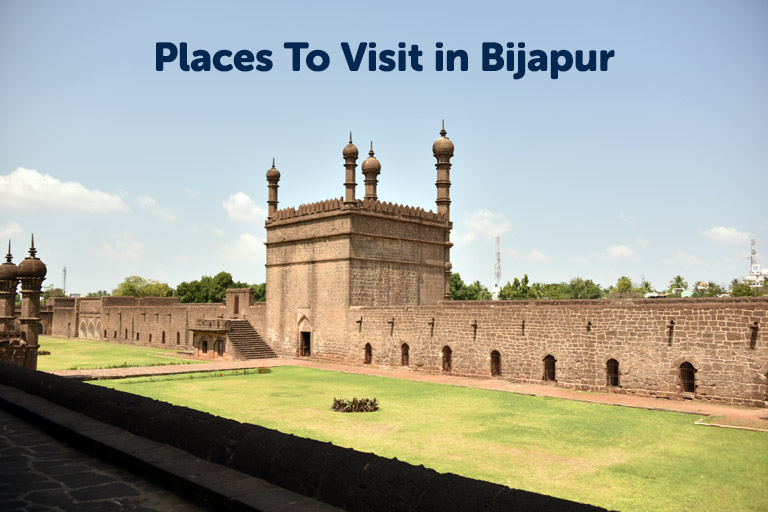
It is often said that in Bijapur, history stands in front of you, domed, arched, carved, and monumental, demanding that you stop and look. The Bijapur tourist places are not ruins in the forgotten sense; they are declarations of power, of beauty, of a sultanate that built with such confidence it left behind structures that still command silence. Walking through this city in Karnataka feels like moving through a story still being told, one magnificent arch at a time.
If you are planning a heritage journey through Deccan India, Bijapur belongs at the top of your list. Read till the end to understand why.
Why Bijapur Is Known as the City of Monuments
Within the boundaries of this relatively compact city in northern Karnataka, there are over fifty significant historical structures, mosques, tombs, fortifications, palaces, and water systems, all dating from the reign of the Adil Shahi dynasty between the 15th and 17th centuries.
Few cities in India concentrate this density of medieval Islamic architecture in such a walkable, accessible area. The Bijapur tourist attractions do not require long drives between them; many are close enough to visit on the same morning. This ease of access, combined with the remarkable quality of the buildings themselves, is what makes Bijapur genuinely special.
The History Behind Bijapur
Bijapur’s golden chapter was written by the Adil Shahi sultans.
- Founded by Yusuf Adil Shah, the dynasty built an empire that patronised art, architecture, music, and poetry with remarkable generosity.
- The Adil Shahis were Shia Muslims with Persian cultural influences, and their architecture reflects a synthesis of Persian, Deccan, and indigenous Indian styles.
- The result is a collection of buildings that feel simultaneously foreign and deeply local. When Aurangzeb finally annexed the sultanate, Bijapur’s political chapter closed, but its architectural legacy proved far more lasting than any military conquest.
Top Bijapur Tourist Places You Must Explore
The places to visit in Bijapur span different architectural types, tombs, mosques, forts, palaces, and step wells, and each site adds a different texture to your understanding of the Adil Shahi world. Move slowly through these spaces; they reward attention.
Here are the most significant Bijapur sightseeing places, ordered not by rank but by the natural flow of a walking itinerary through the city.
Gol Gumbaz
Gol Gumbaz is the centrepiece of Bijapur and one of the most remarkable structures in India. The mausoleum of Sultan Muhammad Adil Shah is crowned by the second-largest dome in the world after St. Peter’s Basilica in Rome. The interior is cavernous and acoustically extraordinary; the Whispering Gallery at the base of the dome carries a sound whispered on one side to the opposite wall with startling clarity. Its architectural grandeur and historical significance make it one of the most fascinating places to visit in Karnataka for history and heritage enthusiasts.
It is the most visited of all Bijapur tourist attractions and non-negotiable on any itinerary.
Ibrahim Rauza
If Gol Gumbaz is impressive, Ibrahim Rauza is beautiful. The tomb complex of Ibrahim Adil Shah II and his queen is considered one of the finest examples of Deccan sultanate architecture. Slender minarets, intricate stonework, and a reflecting tank create an atmosphere of quiet refinement.
Many historians suggest that Ibrahim Rauza may have inspired elements of the Taj Mahal’s design, a claim that becomes entirely believable the moment you stand before it.
Bijapur Fort
The fortified walls of Bijapur stretch for nearly ten kilometres and were built to defend the sultanate at its peak. Several gates, bastions, and the remnants of an interior moat system survive, giving visitors a sense of the city’s original defensive scale. This is one of the places to see in Bijapur that frames the entire heritage zone.
Jumma Masjid
The Jumma Masjid, or Jama Masjid, was built by Ali Adil Shah I in the 16th century and represents the largest mosque in Karnataka. Its vast prayer hall, supported by elegant arches and topped by multiple domes, can accommodate thousands of worshippers. The interior has a calm, solemn grandeur. As one of Bijapur’s most important architectural landmarks, it is frequently featured in Karnataka tour packages that showcase the state’s rich historical and cultural heritage.
Bara Kaman
Bara Kaman is an unfinished monument, the planned mausoleum of Ali Adil Shah II, and its incompleteness is precisely what makes it haunting. Twelve arches rise from the ground in skeletal grandeur, open to the sky, framing views of Gol Gumbaz in the distance. It is one of the most photogenic Bijapur tourist spots in the city.
Malik-e-Maidan
Malik-e-Maidan translates to Master of the Plains, and it is the name given to the largest medieval cannon in the world, 4.45 metres long, mounted on a broad bastion of the fort wall. It was reportedly transported to Bijapur by seventy pairs of oxen and ten elephants. It is an astonishing object in any context.
Gagan Mahal
Gagan Mahal, the Sky Palace, was a ceremonial hall used for royal audiences. The central arch is among the largest in Deccan architecture, and the structure’s open, airy design creates a very different mood from the more enclosed tombs and mosques nearby.
Asar Mahal
Asar Mahal was originally built as a hall of justice and later used to house hairs from the Prophet Muhammad’s beard, relics that gave it a sacred status among the local Muslim community. The painted interiors are notable, though access to certain sections is restricted.
Chand Bawdi
Chand Bawdi is a step well of considerable age and architectural interest. Step wells in Deccan cities served both practical and civic purposes, and this one is a good example of the functional elegance that Adil Shahi builders applied even to infrastructure.
Mehtar Mahal
Mehtar Mahal is a gateway known for its fine decorative stonework and wooden brackets, details that reveal the craftsman’s hand in ways the larger monuments sometimes don’t. It is a smaller stop but a rewarding one for those interested in the finer details of Adil Shahi ornamentation.
Upli Buruj
Upli Buruj is a tall circular watchtower from which the original garrison could survey the surrounding landscape. Today, visitors climb its interior staircase for panoramic views over the city, one of the more active and rewarding Bijapur sightseeing places for those who enjoy a view.
Things You Didn’t Know About Bijapur
- Bijapur is now officially renamed Vijayapura in Karnataka’s records, though the historic name remains more widely used and recognised.
- The Gol Gumbaz dome has a diameter of approximately 44 metres, larger than the Pantheon in Rome.
- Ibrahim Adil Shah II was a poet and musician who composed a significant work in the Dakhni language called Kitab-e-Nauras.
- The city’s water management system during the Adil Shahi period was sophisticated enough to supply water through a network of underground channels.
- The Malik-e-Maidan cannon has never been fired from Bijapur; it was captured from Ahmadnagar during a battle.
Operating Hours and Entry Fees for Major Bijapur Attractions
| Attraction | Visiting Hours | Entry Fee (approx.) |
| Gol Gumbaz | 6:00 AM – 6:00 PM | ₹40 (Indians), ₹600 (foreigners) |
| Ibrahim Rauza | 6:00 AM – 6:00 PM | ₹40 (Indians), ₹600 (foreigners) |
| Bijapur Fort | Sunrise – Sunset | Free / Minimal |
| Jumma Masjid | Open except prayer times | Free |
| Bara Kaman | Sunrise – Sunset | Minimal |
| Upli Buruj | 6:00 AM – 6:00 PM | Minimal |
*Fees and timings are subject to revision; confirm with ASI or local sources before visiting.
Places to Visit Near Bijapur for Short Trips
Bijapur’s location in northern Karnataka places it within comfortable reach of some of the most significant archaeological sites in South India. Adding even one or two of these to a Bijapur itinerary creates a journey of exceptional historical depth.
The places to visit near Bijapur cover different eras entirely, from early Chalukyan cave temples to riverine pilgrimage centres, giving your trip a much wider historical sweep.
Badami
Badami is home to stunning rock-cut cave temples carved into red sandstone cliffs during the Chalukyan period. The caves overlook a beautiful tank, and the site carries a very different, older energy from the Adil Shahi monuments of Bijapur.
Aihole
Aihole is often called the cradle of Indian temple architecture, with over a hundred temples spanning several centuries of early experimentation in stone. As a tourist place near Bijapur, it is particularly significant for architecture-focused travellers.
Pattadakal
A UNESCO World Heritage Site, Pattadakal contains a remarkable concentration of early Chalukyan temples that show both northern and southern architectural styles coexisting in the same complex. It is one of the most important temple sites in Karnataka.
Want to explore other heritage sites? Read this blog to know about the top UNESCO-listed sites in India.
Bagalkot
Bagalkot is the district headquarters and a practical stopover. The Almatti Dam on the Krishna River nearby is worth a visit for its scale and the views across the backwaters.
Kudalasangama
Kudalasangama is the confluence of the Krishna and Malaprabha rivers and a significant pilgrimage site associated with the 12th-century philosopher-saint Basavanna. It is a calm, spiritually charged location and a meaningful short trip for those interested in Lingayat history.
Best Time to Visit Bijapur for Sightseeing
October to March is the most comfortable season for exploring the Bijapur sightseeing places. The weather during these months is dry and manageable, and the long outdoor walks between monuments do not become exhausting.
April to June is hot and best avoided for heavy sightseeing, though early morning visits are still feasible. Monsoon softens the heat and adds green to the landscape, but outdoor exploration is limited by rain.
Conclusion
Bijapur asks something of its visitors that most tourist destinations do not: attention. The monuments here are not simply backgrounds for photographs; they are objects of serious architectural and historical significance, and they reveal more the longer you stay with them. The places to visit in Bijapur form one of the most coherent and rewarding heritage circuits in India, and for travellers willing to slow down and look carefully, this city offers a depth that is genuinely rare. You can also explore India tour packages to combine Bijapur with other iconic heritage, cultural, and historical destinations across the country.
Frequently Asked Questions
What is Bijapur famous for?
Bijapur is famous for its Adil Shahi-era monuments, particularly Gol Gumbaz and Ibrahim Rauza. The city’s density of medieval Islamic architecture makes it one of the most important heritage destinations in Karnataka and India.
Is Bijapur worth visiting?
For anyone interested in history, architecture, or medieval Indian culture, Bijapur is a deeply rewarding destination. The quality and number of Bijapur tourist attractions concentrated in one city are exceptional.
What are the best places to visit in Bijapur?
Gol Gumbaz, Ibrahim Rauza, Bara Kaman, Bijapur Fort, Jumma Masjid, and Malik-e-Maidan are the essential stops. Together, they cover the full scope of what makes Bijapur significant.
How many days are enough to explore the Bijapur sightseeing places?
Two days are comfortable for covering all the main Bijapur tourist places in the city. Three days allow for a more relaxed pace, plus a day trip to Badami or Pattadakal.