Some cities don’t announce their beauty; they hold it gently, like a secret between the plains and the mountains, and Pathankot is exactly that. The places to visit in Pathankot fall at a threshold where the flat lands of Punjab begin to soften into hills, where ancient temples catch the morning light, and where rivers run wide and unhurried. It is a city that carries military pride, spiritual depth, and natural beauty in the same quiet breath.
If you are planning a trip to Pathankot and wondering where to start, read on. This guide has everything you need.
Reasons to Explore Pathankot
Pathankot is located at a unique geographical crossroads.
- It is the gateway to some of Himachal Pradesh’s most beloved hill destinations, Dalhousie, Dharamshala, Chamba, and Khajjiar, all of which begin their road journeys from here. But beyond its role as a transit point, the city has its own story worth staying for.
- The best places in Pathankot span temples of real antiquity, river-fed dam landscapes, and old forts that once guarded important mountain passes.
- For travellers who appreciate a destination that works on multiple levels, pilgrimage, nature, history, and onward adventure, Pathankot is an excellent base.
The History Behind Pathankot
Pathankot’s history runs deep. The region finds mention in ancient texts, and its position on the route between the plains and the northwestern mountains made it strategically significant through multiple dynasties.
- The Katoch rulers of Kangra held influence over this region for centuries, and traces of their era survive in forts and temples that still stand.
- During the British period, Pathankot became an important military and railway hub, a character it retains today as a significant cantonment city.
- The blend of pre-medieval spiritual heritage and colonial-era infrastructure gives Pathankot a layered identity that rewards curious travellers.
Best Tourist Places in Pathankot
The Pathankot tourist places cover a range of experiences, from temple courtyards wrapped in devotion to dam waters spread across a wide horizon. Whether you come for a single day or a weekend, these sites ensure your time is spent well. Many travellers also explore them through Punjab tour packages, combining Pathankot’s spiritual, cultural, and natural attractions with other highlights across the state.
Take the temples in the morning when the light is softer and the crowds thinner, and save the outdoor sites for late afternoon when the heat eases, and the colours deepen.
Lakshmi Narayan Temple
The Lakshmi Narayan Temple is one of the most important religious sites in Pathankot, dedicated to Lord Vishnu and Goddess Lakshmi. The architecture is traditional and well-maintained.
Ashapurni Temple
The Ashapurni Temple is one of the most visited and best tourist places in Pathankot. The goddess is believed to fulfil the wishes of sincere devotees.
Kathgarh Temple
Kathgarh Temple, situated on the banks of the Beas River near Pathankot, is an ancient and architecturally distinctive Shiva shrine. The lingam here is unusual; it is composed of two halves that are said to join together on Shivratri, a phenomenon that draws large gatherings of devotees. Its unique religious significance makes it a notable stop on many spiritual tour packages focused on sacred sites in northern India.
Kali Mata Temple
The Kali Mata Temple in Pathankot is a significant local religious site. It carries a vibrant energy, particularly during festivals.
Nagni Temple
The Nagni Temple is dedicated to the serpent goddess. The atmosphere makes it a meaningful addition to a Pathankot places to visit itinerary.
Hydraulic Research Station
Set on the Chakki River, this government research facility examines river flow, sedimentation, and water management. Visitors can observe scale models of river engineering projects.
Mukteshwar Temple
The Mukteshwar Temple is an ancient Shiva shrine set amid peaceful surroundings outside the main city. The name translates to the Lord who grants liberation, and the temple carries a serene, timeless quality that feels removed from the pace of everyday Pathankot.
Ranjit Sagar Dam
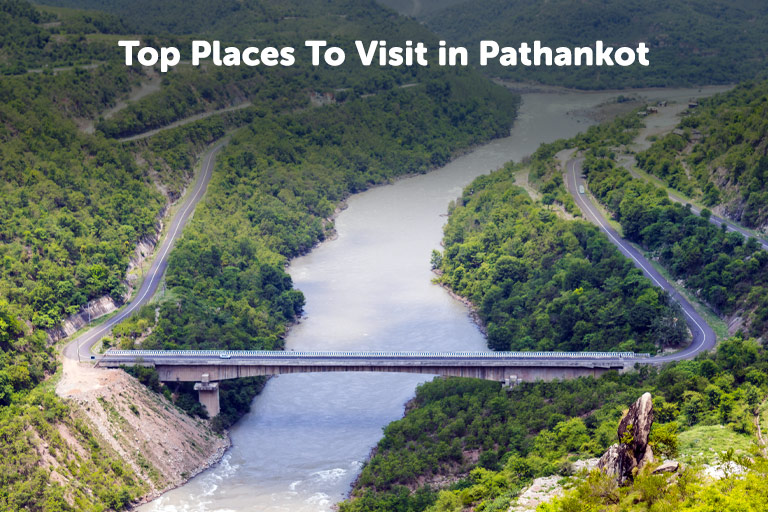
Ranjit Sagar Dam, also known as Thein Dam, is one of the largest dams in northwestern India. Built on the Ravi River, it creates a large reservoir that stretches across parts of Punjab, Jammu, and Himachal Pradesh. The dam site offers wide, open views of the water and surrounding hills, and it is one of the most scenic places to see in Pathankot for an outdoor afternoon.
Boating facilities are available seasonally, and the landscape around the reservoir is particularly beautiful in winter and early spring.
Nurpur Fort
Nurpur Fort is a historical fort from the Katoch dynasty. The ruins carry a quiet grandeur, and a small temple dedicated to Lord Krishna sits within the fort complex. The views from the fort walls and the surrounding town give it a very different feel from Pathankot’s plains. Its blend of history, architecture, and scenic surroundings adds depth to the experiences associated with Punjab tourism, especially for travellers interested in heritage attractions.
Shahpurkandi Fort
Shahpurkandi Fort stands near the Ranjit Sagar Dam area and was historically significant for guarding river crossings in this region. The fort is partially in ruins but worth a visit for its setting, elevated above the river, with views that explain exactly why it was built here.
Interesting Facts about Pathankot
- Pathankot is one of India’s most important military cantonments and serves as a key base for the Indian Air Force and Army.
- The city is sometimes called the Gateway to the Hills because most road and rail journeys to Dalhousie, Dharamshala, and Chamba pass through it.
- Pathankot Railway Station is a historic junction from the British era and remains a major interchange for the Kangra Valley Railway, one of the most scenic narrow-gauge rail routes in India.
- The Chakki River, which flows near Pathankot, forms the boundary between Punjab and Himachal Pradesh.
- Kathgarh’s self-joining lingam during Shivratri is one of the more extraordinary natural phenomena associated with temple worship in the region.
Operating Hours and Ticket Prices for Major Attractions
| Attraction | Visiting Hours | Entry Fee |
| Lakshmi Narayan Temple | 5:00 AM – 9:00 PM | Free |
| Ashapurni Temple | 5:00 AM – 9:00 PM | Free |
| Kathgarh Temple | Sunrise – Sunset | Free |
| Ranjit Sagar Dam | 9:00 AM – 5:00 PM | Minimal / Free |
| Nurpur Fort | Sunrise – Sunset | Minimal |
| Shahpurkandi Fort | Sunrise – Sunset | Free |
| Hydraulic Research Station | 10:00 AM – 5:00 PM (weekdays) | Free |
Timings may vary seasonally; confirm locally before visiting.
Places to Visit Near Pathankot
One of Pathankot’s greatest strengths is what lies just beyond its borders. The hill stations near Pathankot and heritage sites within a two-to-three-hour drive are among the most celebrated in northern India.
These places to visit near Pathankot can be visited as day trips from a Pathankot base or as part of a longer Himachal Pradesh circuit that begins and ends here.
Dalhousie
About 80 kilometres from Pathankot, Dalhousie is a classic hill station built during the British era. Winding roads, colonial churches, pine forests, and views of the Pir Panjal range make it one of the most romantic places to visit in Pathankot for couples and a natural extension of any Pathankot itinerary.
Dharamshala
Dharamshala and its upper section, McLeod Ganj, are around 90 kilometres away and form the home of the Tibetan government-in-exile. Buddhist monasteries, mountain views, and a vibrant café culture make it one of the most distinct and internationally loved destinations in Himachal Pradesh.
Kangra Fort
One of the oldest and largest forts in the Himalayas, Kangra Fort sits dramatically above the confluence of the Banganga and Majhi rivers. Its history stretches back over two thousand years and includes conquests by Alexander the Great’s generals, the Mughals, and the Sikhs. It is a deeply rewarding stop for anyone interested in northern India’s complex history.
Chamba
Chamba is a mountain town of considerable antiquity, known for its ancient temples, the Chaugan meadow, and a distinct local art form called Chamba Rumal. It is about 120 kilometres from Pathankot and deserves at least a night’s stay to be appreciated properly.
Khajjiar
Known as the Mini Switzerland of India, Khajjiar is a small meadow at a high altitude surrounded by dense forests of deodar. It is beautiful, serene, and easily combined with Dalhousie into a single overnight trip from Pathankot.
Want to explore more places in Himachal Pradesh? Check out this guide to know in detail about Himachal Pradesh tourism.
Best Time to Visit Pathankot
The weather in Pathankot and the connected hill regions changes significantly across the year, and choosing your season shapes the whole character of the trip. Two general rules apply: winter is best for clear mountain views and comfortable temple visits, while monsoon transforms the landscape but limits outdoor movement.
Here is a seasonal breakdown to help plan your visit:
| Season | Months | Weather | Best for |
| Winter | November – February | Cool to cold, dry | Temple visits, dam views, hill trips |
| Spring | March – April | Pleasant, mild | All-round sightseeing, outdoor exploration |
| Summer | May – June | Warm in the city, cool in the hills | Hill station extensions |
| Monsoon | July – September | Heavy rain, lush green | Scenic beauty, flexible indoor plans |
| Autumn | October | Clear skies, comfortable | Excellent all-round season |
October to March is widely considered the best window for the best places to visit in Pathankot and the surrounding hill areas.
Conclusion
Pathankot asks very little of you and returns a great deal. It is a city that works quietly, through temple bells at dawn, through the wide spread of dam water at dusk, through the cool air that begins to arrive as you head toward the hills. The places to visit in Pathankot are not competing for your attention the way busier tourist destinations do. They simply exist with a kind of steadiness that, if you slow down enough to notice, feels like exactly what travel is for.
Frequently Asked Questions
Why is Pathankot famous?
Pathankot is famous as the gateway to Himachal Pradesh’s hill stations, its military significance, and its ancient temples. The Ranjit Sagar Dam and Kathgarh Temple are among the most notable best places to visit in Pathankot for first-time visitors.
What is the best time to visit Pathankot?
October to March is the most recommended window. The hill stations near Pathankot are accessible and beautiful during these months.
What are the best places to visit in Pathankot?
Ranjit Sagar Dam, Kathgarh Temple, and Ashapurni Temple are the most visited Pathankot tourist places.
How many days are enough to explore Pathankot?
One to two days is sufficient for the city’s main sights. Three to four days allows you to add day trips to Dalhousie, Kangra Fort, or Dharamshala