
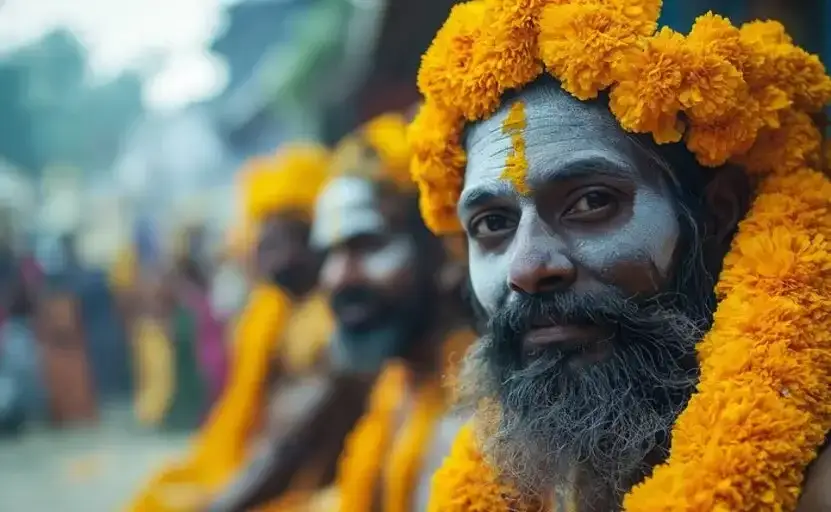
A crowd gathers, conch shells sound, and through the rising dust come figures covered in ash, their hair tangled into thick locks. Some carry tridents. Others walk quietly with their fellow ascetics. The Naga Sadhus are among the most prominent faces of the Kumbh Mela. Their lives are based on renunciation, religious discipline and traditions handed down through the ages. The 2027 gathering is an opportunity to understand who are Naga Sadhus and why they have a distinctive place in Hindu spiritual life.
Who Are Naga Sadhus? Meaning, Origins and Traditions
Naga Sadhus are Hindu holy men who renounce family life, material possessions and the comforts of everyday living to devote themselves to spiritual practice. The naga sadhu meaning goes beyond their strange appearance and is based on renunciation, self-control and a life of religious devotion.
Why Are They Called Naga Sadhus?
Naga Sadhus are often recognised by the fact that many of them are without clothes. The name “Naga” is commonly linked to this practice. Most Naga Sadhus follow Shaivite traditions and worship Lord Shiva.
How Can You Identify a Naga Sadhu?
At a Kumbh gathering, you may see Naga Sadhus with ash spread across their bodies and hair grown into thick, tangled locks. Many wear rudraksha beads and have religious marks on their foreheads. A trident is another familiar sight, though not everyone carries one. Look closely, and you will notice that they do not look alike. Their clothing, markings and belongings vary with their practices and religious affiliations.
Why Do Naga Sadhus Live Without Clothes?
Some Naga Sadhus Kumbh Mela avoid wearing clothes as a way of rejecting possessions and social position. It is a deeper commitment to renunciation, not a desire to attract attention. The practice is not identical across every setting, however. Some Naga Sadhus wear a loincloth or robes, depending on their order, personal vows and circumstances.
Why Do Naga Sadhus Carry Weapons?
The weapons carried by Naga Sadhus reflect a history that combines spiritual practice with martial traditions. In earlier centuries, some ascetic groups trained to defend religious institutions, pilgrimage routes and their communities. Today, objects such as tridents, swords and spears often represent their akhara’s heritage and religious identity.
Naga Sadhu History and the Akhara Tradition
The naga sadhu history is closely linked to Hindu monastic orders that preserve spiritual teachings, strict discipline and a historic tradition of warrior ascetics.
What Is an Akhara?
An akhara is an organised community of Hindu ascetics with its own spiritual lineage, leadership and religious practices.
At the Kumbh Mela, akharas lead ceremonial processions, conduct rituals and provide a community for sadhus to learn and practise their traditions. Exploring these spiritual gatherings can be a memorable experience with Kumbh Mela tour packages.
How Did the Naga Sadhu Tradition Develop?
Hindu tradition connects the organisation of Naga ascetics with Adi Shankaracharya, though historians note that the exact origins are difficult to establish.
Naga Sadhu Life and Spiritual Practices
The naga sadhu life revolves around renunciation, daily spiritual discipline and a deep commitment to religious practices. Their routines differ by individual choices and akhara.
What Do Naga Sadhus Eat?
Many eat simple vegetarian meals, such as dal, roti, vegetables and seasonal fruit. Some limit themselves to one meal a day. Others depend on food offered by devotees, particularly when travelling or staying at an akhara.
How Do Naga Sadhus Meditate?
Some repeat mantras for hours; others sit quietly and concentrate on their breathing. Yoga is also part of the practice for some. A sadhu may meditate alone in a secluded spot or alongside others at an akhara.
Why Do Naga Sadhus Smear Bhasma?
The ash that covers the body of a Naga Sadhu is called bhasma. It is closely related to Lord Shiva, who is often seen with ash on his body. For the Naga Sadhus, it is a religious act and a reminder that the body and worldly possessions are not everlasting.
Where Do Naga Sadhus Live?
A Naga Sadhu may spend part of the year at an akhara or ashram, then travel elsewhere for a pilgrimage or religious gathering. Some stay in temporary camps during events such as Kumbh Mela. Others seek quieter places, including remote mountain areas, where they can devote more time to meditation and austerities.
How to Become a Naga Sadhu
Becoming a Naga Sadhu is a matter of long commitment, not a decision made overnight. An aspirant must undergo spiritual training under a guru and receive initiation through an akhara.
The Process of Becoming a Naga Sadhu
- The aspirant approaches an akhara and seeks guidance from a recognised spiritual teacher. Acceptance depends on the traditions and requirements of that order.
- Training can involve celibacy, service, prayer and giving up personal possessions. The discipline prepares the aspirant for a life centred on spiritual practice.
- Once the guru considers the aspirant ready, formal rites of renunciation may follow. The precise process varies between akharas and can involve a symbolic break from their former life.
Women Naga Sadhus, Who Are They?
Women also follow ascetic paths within Hindu religious traditions. They are described as Naga Sadhvis and leave behind ordinary domestic life and devote themselves to spiritual practice under a guru. They may observe celibacy, meditation and other forms of discipline. Their customs can differ from those of male ascetics.
Naga Sadhus at Kumbh Mela 2027
When Kumbh Mela draws pilgrims from across India, Naga Sadhus gather with their akharas for sacred bathing, worship and ceremonial processions.
What Do Naga Sadhus Do at Kumbh Mela?
Naga Sadhu rituals include religious processions, performing spiritual rituals and bathing in sacred waters on auspicious days. They gather with fellow ascetics from their akharas.
The Amrit Snan Procession
During Amrit Snan, akharas proceed towards designated bathing spots with religious flags, chants and traditional displays. Their ceremonial order showcases each group’s standing and customs.
Amrit Snan Dates for Kumbh Mela 2027
A provisional calendar notes 2 and 31 August 2027 for both towns; 11 September in Nashik and 12 September in Trimbakeshwar.
The Akharas at Nashik Kumbh Mela 2027
The akharas at Nashik Kumbh Mela 2027 represent different Hindu ascetic traditions, including Shaiva, Vaishnava and Udasin orders. A trip to Nashik offers an opportunity to witness these spiritual traditions and learn about their significance in the Kumbh Mela.
Shaiva and Vaishnava Akharas, What Is the Difference?
| Aspect | Shaiva Akharas | Vaishnava Akharas |
| Main deity | Lord Shiva. | Lord Vishnu and his avatars, especially Rama and Krishna. |
| Spiritual tradition | Shaivism. | Vaishnavism. |
| Religious practices | Shiva worship, meditation and ascetic disciplines. | Devotion, prayer, mantra chanting and worship of Vishnu or his avatars. |
| Common symbols | Often associated with sacred ash, rudraksha beads and tridents. | Often associated with tilak markings and symbols linked to Vishnu. |
Major Akharas to Know
Juna, Niranjani and Mahanirvani are among the well-known Shaiva akharas. The Vaishnava tradition includes Nirmohi, Nirvani and Digambar Akharas. When Kumbh Mela takes place, these differences become easier to see in the way the groups dress, gather and move in procession.
Where to See Naga Sadhus at Nashik Kumbh Mela 2027
Trimbakeshwar is closely associated with the Shaiva akharas and their Naga Sadhus. Nashik city has its own religious centres, bathing ghats and Vaishnava traditions. Visitors hoping to see the ascetics should keep an eye on announcements about processions and bathing days, as these can be the busiest times.
Akhara Camps in Nashik and Trimbakeshwar
Akhara camps are expected to be set up in both Nashik and Trimbakeshwar during the Kumbh gathering. While exploring the places to visit in Nashik, remember that camp locations may change based on event arrangements. Check official announcements for camp locations, public access and any restrictions before setting out.
How to Respectfully Observe and Photograph Naga Sadhus
It is easy to be drawn to the appearance of naga sadhus in Kumbh Mela, especially during a procession. Maintain your distance, ask before taking a photograph and leave them undisturbed if they are praying. Never touch a sadhu or their belongings without permission.
Naga Sadhu Blessings and Their Significance
A blessing or a word of spiritual advice is sought from Naga Sadhus by some devotees. The meeting may have personal significance for those with faith in the ascetic’s discipline and religious life. A blessing might be a brief spoken prayer, a gesture or a tilak on the forehead. The form varies from one sadhu to another.
Naga Sadhus, Aghoris and Other Ascetics
Naga Sadhus and Aghoris are both associated with Hindu ascetic traditions, but they do not follow exactly the same path. Their practices, religious outlook and approach to renunciation can differ quite sharply.
Who Are Aghori Sadhus?
Aghoris follow a Shaivite path devoted to Lord Shiva, particularly his form as Bhairava. Their practices challenge familiar ideas about purity, impurity and death. Within the tradition, these practices are connected with overcoming fear, attachment and the divisions people place between the sacred and the ordinary.
How Are Aghoris Different From Naga Sadhus?
Naga Sadhus are commonly seen with their akharas during major religious gatherings, including Kumbh Mela. The Aghoris are a band of practitioners with diverse spiritual practices, especially those that defy conventional ideas of purity and death. Both traditions have been associated with Lord Shiva, but their rituals, communities and spiritual approaches are different.
Frequently Asked Questions
1. Can I see Naga Sadhus at Kumbh Mela?
Yes, and you are most likely to spot them around their akharas or during the big bathing processions. These are busy moments, so getting a clear view needs some patience.
2. Can Naga Sadhus Get Married?
No, not normally. When the Naga Sadhus take the path of renunciation, they give up married life. Besides, they make a promise to stay chaste and devote their time to spirituality.
3. Do Naga Sadhus Have Special Powers?
You will hear stories of Naga Sadhus developing strange powers after years of meditation and harsh austerities. Some devotees firmly believe many of these stories. But claims of supernatural abilities are part of religious faith; there is no scientific evidence for them.
4. What do Naga Sadhus do at Kumbh Mela?
Naga Sadhus assemble with other ascetics, conduct religious rites, pray and participate in the sacred bathing. These are an integral part of the Kumbh Mela.
5. How can I respectfully interact with or photograph Naga Sadhus?
A simple rule goes a long way: ask before taking a picture. Some sadhus may agree, others may not. Keep your distance during prayers, don’t interrupt a ritual for a photograph and respect their response without pushing for an answer.