
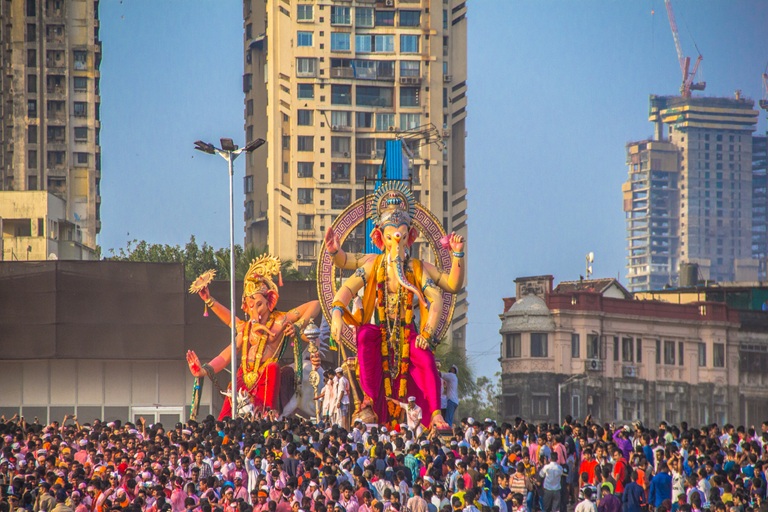
Ganesh Chaturthi celebrates Lord Ganesha’s birth, wisdom, auspicious beginnings and the removal of obstacles. Across India, it brings devotion into homes and public spaces through prayer, art, music, food and shared traditions. The festival feels both personal and collective.
A small clay idol welcomed into a family home carries the same warmth as a beautifully decorated public pandal. For travellers, the occasion reveals India’s living culture through faith, craftsmanship and neighbourhood life.
Why the Festival Holds a Special Place
To understand Ganesh Chaturthi in India, look beyond colourful processions and grand decorations. Lord Ganesha is worshipped before new journeys, family occasions and important beginnings because he represents wisdom, humility and courage.
A Ganesh Chaturthi celebration usually brings together prayers, songs, offerings, family visits and immersion rituals. People reading about Ganesh Chaturthi also see how the festival supports artisans, musicians, flower sellers, cooks and decorators.
While the biggest Ganpati statue in India may attract crowds, smaller home celebrations feel equally meaningful. The true Ganesh Chaturthi significance lies in joining personal faith with community warmth and shared cultural traditions each year.
How Ganesh Chaturthi Began
The roots of Ganesh Chaturthi in India lie in long-standing Hindu traditions connected with the birth and worship of Lord Ganesha. Religious traditions contain several accounts of his origin. Travellers exploring holiday packages in Maharashtra during the festive period can see how this heritage remains visible in household rituals, community pandals and local customs.
The most widely shared story describes Goddess Parvati creating Ganesha and appointing him to guard her privacy. When Lord Shiva returned, a conflict followed. Ganesha was later restored to life with an elephant’s head and accepted as Shiva and Parvati’s son.
It introduces ideas that remain central to the festival:
- Duty should be performed with sincerity, even when it is difficult.
- Anger can cause harm when wisdom and patience are absent.
- Love, acceptance and restoration can follow conflict.
- An unusual form can carry exceptional intelligence and strength.
Over time, households began marking Ganesha’s arrival through idol installation, prayer, offerings and devotional gatherings. Communities shaped these practices through local food, music, art and language.
How a Household Festival Entered Public Life
The public festival grew when nationalist leader Bal Gangadhar Tilak encouraged community celebrations during British rule. Religious gatherings allowed people to meet, hear speeches, enjoy performances and strengthen a shared identity.
Pandals became places for more than prayer. They hosted discussions, music, theatre and cultural activities that reached different social groups. Devotion became a form of participation without losing its sacred character.
This change gave the Ganesh Chaturthi celebration in India a lasting social dimension. Many mandals still organise charitable initiatives, cultural events and neighbourhood services alongside worship, carrying memories of faith and civic unity. Travellers planning a Hyderabad trip package around the festival may also notice how public celebrations absorb Telugu music, local foods and regional devotional customs.
The Story Connected with Lord Ganesha’s Birth
The story behind Ganesh Chaturthi tells how Goddess Parvati created Ganesha and asked him to guard her. When Lord Shiva returned, a conflict arose, and Ganesha lost his head. Moved by Parvati’s grief, Shiva restored him with an elephant’s head and accepted him as his son.
The story continues to inspire because it represents:
- Restoration after loss
- Acceptance beyond appearance
- Wisdom, patience and careful listening
Why Lord Ganesha Is Worshipped First
Lord Ganesha is known as Vighnaharta, the remover of obstacles, and is invoked before many ceremonies and important undertakings. Worshipping him first reflects the hope that difficulties will be handled with wisdom rather than fear.
His form communicates practical lessons:
- The large head suggests broad thinking and good judgement.
- The wide ears encourage patient listening.
- The small eyes represent concentration and attention.
- The trunk reflects strength combined with adaptability.
- The mouse suggests restless desire that must be guided.
- The modak represents sweetness following sincere effort.
Devotion is therefore not presented as passive belief. It is linked with qualities that people can practise in relationships, work, study and personal decisions. During a trip to Bangalore, travellers may see these ideas reflected in temple rituals, community gatherings and celebrations shaped by the city’s diverse neighbourhoods.
What the Festival Means Spiritually
At its heart, Ganesh Chaturthi is about inviting awareness into ordinary life. Cleaning the home, preparing the prayer space and shaping a clay idol can become acts of attention. Families pause their routines, gather and create time for reflection.
The festival encourages several inward values:
- Beginning important work with clarity and humility
- Recognising obstacles without becoming discouraged
- Sharing food, time and responsibilities with others
- Respecting knowledge, creativity and disciplined effort
- Letting go of pride, resentment and unnecessary attachment
These lessons keep the festival relevant as lifestyles change. Rituals provide a framework, while the deeper purpose lies in the habits of mind and heart carried beyond the celebration.
What Ganesh Chaturthi Symbolises
Ganesh Chaturthi carries several layers of meaning across generations.
New Beginnings
Ganesha’s presence is linked with fresh starts. The festival encourages people to leave behind hesitation, repair strained relationships and approach unfinished responsibilities with renewed steadiness.
Wisdom over Pride
Lord Ganesha’s stories show that intelligence, patience and humility are more meaningful than outward strength. This message is reflected in Goa’s quiet household prayers, local artistry and traditional food. During the festive season, Goa tour packages may offer travellers a closer view of these intimate customs and ancestral traditions.
Creativity Rooted in Faith
Idol makers, painters, musicians and decorators turn devotion into art through expressive pandals and thoughtful themes. Their true impact comes from craftsmanship, emotion, cultural detail and the strong connection shared by the community.
Respect for Nature
Traditional clay idols return naturally to the earth through water. Growing awareness around materials, decorations and immersion practices has encouraged many communities to choose gentler celebrations. The aim is to honour devotion while caring for shared spaces.
Why Community Pandals Matter
A public pandal is built through cooperation. Residents contribute ideas, time, creative skills and practical help. Artists develop the idol and setting, volunteers manage visitors, and families join prayers and cultural activities. The strongest pandals create belonging rather than spectacle alone.
Their value often comes from:
- Bringing different generations into one shared activity
- Giving local performers and artists a visible platform
- Organising food distribution or community support
- Encouraging young volunteers to take responsibility
- Keeping regional music, decoration and storytelling alive
A modest neighbourhood idol can hold years of memories. This emotional connection draws families back to the same celebrations year after year.
The Role of Art, Food and Music
Ganesh Chaturthi gives traditional skills a public stage. Idol makers work with clay, natural colours and detailed ornamentation. Decorators create settings inspired by temples, landscapes, social themes or regional architecture. Performers add energy to community programmes.
Modaks are closely associated with Lord Ganesha, while regional kitchens prepare their own sweets and savoury dishes. Family recipes turn festive cooking into cultural memory.
Music moves between quiet aartis and lively processions. One creates reflection, while the other expresses collective joy. Together, they make devotion something people can hear, see, taste and share.
Why Ganesh Visarjan Is Significant
Visarjan is the farewell offered to the idol after worship. The procession may be energetic, but immersion is deeply emotional. Devotees express gratitude and ask Lord Ganesha to return.
Spiritually, the ritual reminds people that physical forms are temporary. The sacred presence welcomed into the idol returns to the larger natural and divine order. The lesson concerns accepting change while preserving faith, memory and values.
Natural clay and responsible immersion practices connect this symbolism with care for water and the environment. A celebration of creation, dissolution and renewal becomes more meaningful when nature is respected.
How the Festival Preserves Indian Traditions
Ganesh Chaturthi keeps heritage alive through practice rather than display. Children learn aartis by joining elders. Family recipes survive because modak and regional savouries are prepared together. Craft skills continue because communities value handmade idols, floral work, rangoli and traditional decoration.
The festival also protects less visible forms of knowledge:
- The order and meaning of household rituals
- Devotional music passed through generations
- Local methods of clay modelling and ornamentation
- Community etiquette around hosting and sharing
- Regional languages used in prayer and performance
Tradition remains alive when it guides contemporary choices without losing its emotional and spiritual centre.
Experiencing the Festival as a Traveller
Ganesh Chaturthi can be memorable for visitors, but it should be approached as a religious and community occasion rather than only a visual attraction. Modest clothing, patient movement through queues and respectful photography help create a considerate experience.
Useful travel habits include:
- Checking local traffic arrangements before visiting popular areas
- Following instructions given by volunteers and authorities
- Avoiding disruption during prayers and aartis
- Choosing quieter periods when travelling with elders or children
- Carrying minimal belongings in crowded public spaces
- Supporting local crafts and food businesses responsibly
A thoughtful visit reveals the festival’s deeper appeal. Beyond the lights and music lies a culture of welcome, shared effort and faith expressed through daily action.
Conclusion
Ganesh Chaturthi brings together devotion, history, art, family life and community participation in a distinctly Indian way. Its public form carries echoes of cultural unity, while household rituals preserve intimate memories across generations. The festival honours Lord Ganesha as a guide for wise beginnings and steady progress. From welcoming the idol to offering a heartfelt farewell, every stage encourages gratitude, responsibility and renewal. For travellers, witnessing the celebration respectfully can become a meaningful encounter with India’s living traditions.