Every corner of the North East seems to have a reason to celebrate. Drums echo across hill villages, rice beer is shared at harvest tables, masked monks dance in mountain monasteries, and whole communities dress in their finest handwoven textiles. The festivals of North East India are not staged for visitors.
They are living traditions, passed from one generation to the next, and each one tells you something about the land, its seasons and the people who call it home. If you want a trip with real cultural depth, this region deserves a place on your list. This blog covers 12 festivals worth attending, the best seasons to visit and how to plan your trip well.
Why the North East Is India’s Most Vibrant Festival Region
Hundreds of communities call the region home, each with its own language, beliefs and calendar of celebrations. Farming cycles, ancestral worship and Buddhist traditions keep the year full. What makes North East India festivals special is their openness, with village dances, community kitchens and visitors welcomed to join in.
Best Festivals in North East India, State by State
This list moves across the region, from Nagaland’s grand cultural gathering to Meghalaya’s drum-filled harvest dances. Dates for the festivals in North East India below follow harvest seasons or lunar calendars, so always confirm exact dates with local tourism offices before booking.
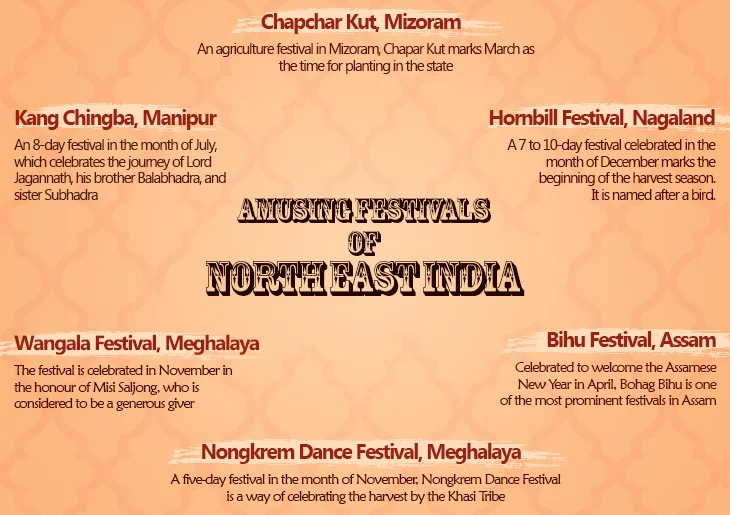
Hornbill Festival: Nagaland
Often called the Festival of Festivals, the Hornbill Festival runs from 1 to 10 December at Kisama Heritage Village near Kohima. A Nagaland tour during this time offers war dances, folk songs, indigenous games, craft stalls and local delicacies such as smoked pork and bamboo shoot dishes.
Bihu: Assam
Bihu is central to Assamese culture and is celebrated three times a year. An Assam trip offers a chance to experience Rongali Bihu in April with energetic folk dances, Kongali Bihu in October with traditional lamps, and Bhogali Bihu in January with harvest feasts.
Sangai Festival: Manipur
Named after Manipur’s state animal, the brow-antlered deer, this festival is celebrated from 21 to 30 November in and around Imphal. It showcases classical Manipuri dance, martial arts such as Thang Ta, indigenous sports and handloom exhibitions, which make it a complete introduction to the state’s artistic heritage.
Losar Festival: Sikkim and Arunachal Pradesh
Losar marks the Tibetan New Year and falls in February or March, depending on the Tibetan lunar calendar. It is observed by Buddhist communities such as the Monpa in Tawang and Tibetan Buddhist families across Sikkim, with monasteries cleaned and decorated, prayers offered, and masked dances and family feasts bringing people together.
Ziro Music Festival: Arunachal Pradesh
Usually held in late September, the Ziro Festival of Music brings independent artists from India and abroad to the scenic Ziro Valley, home to the Apatani tribe. Arunachal tour packages around festival dates let you enjoy live music, campsite stays, local food stalls and views of the surrounding rice paddies.
Mopin Festival: Arunachal Pradesh
Celebrated by the Galo tribe on 5 April, Mopin honours the goddess Mopin Ane, who is believed to bring prosperity and ward off evil spirits. Villagers smear rice flour on each other’s faces, dance the Popir and share rice cakes and apong, a traditional rice beer.
Chapchar Kut: Mizoram
Chapchar Kut is a spring festival held in the first week of March, following the clearing of forest land for jhum cultivation. Dancers in bright traditional dress perform the Cheraw and Chheih Lam, and songs and feasting fill the days. It is among Mizoram’s most cherished celebrations.
Wangala Festival: Meghalaya
Also known as the Hundred Drums Festival, Wangala is celebrated in November, with the largest event held near Tura. A trip to Meghalaya during this time offers a glimpse into the Garo people’s post-harvest thanksgiving to Misi Saljong, the sun god, featuring traditional dances, feathered headgear and the thunderous beats of long drums.
Myoko Festival: Arunachal Pradesh
Myoko is the Apatani festival of friendship and prosperity, celebrated in the Ziro Valley in March, usually around the first week. Families host one another, animals are offered in ritual prayers, and neighbours exchange gifts and meals, which gives visitors an excellent window into everyday tribal life.
Torgya Festival: Arunachal Pradesh
Torgya is held at Tawang Monastery in January, following the Monpa lunar calendar, and is meant to protect the community from evil forces and natural calamities. Monks perform masked dances in dazzling costumes over three days, while locals gather in the monastery courtyard to watch and pray.
Ambubachi Mela: Assam
Held in the third week of June at the Kamakhya Temple in Guwahati, this fair marks the annual menstruation of Goddess Kamakhya, a symbol of fertility and the power of the earth. Pilgrims, ascetics and devotees travel from across the country to attend, and the temple remains closed for three days before reopening.
Nongkrem Dance Festival: Meghalaya
This is the major religious festival of the Khasi people, celebrated over five days in November at Smit near Shillong. Women in silk and gold ornaments dance in a slow, graceful rhythm while men perform with swords, all in honour of the goddess Ka Blei Synshar for a good harvest.
When Is the Best Time to Experience North East Festivals?
Timing matters when you plan around celebrations, since weather and travel conditions shift sharply across the year. The best time to catch North East festivals is generally between October and April, when skies are clear and roads are more reliable. A quick seasonal guide helps you pick your window:
- October to November: Kongali Bihu, Wangala, Nongkrem and the Sangai Festival fall in this period, along with pleasant post-monsoon weather.
- December: Hornbill Festival brings Nagaland to life, though nights are cold, so pack warm layers.
- January to March: Torgya, Losar, Myoko, Bhogali Bihu and Chapchar Kut keep the calendar full.
- April: Rongali Bihu and Mopin mark the arrival of spring and the new farming year.
- June: Ambubachi Mela takes place during the monsoon, so plan for heavy rain and possible travel delays.
How to Plan a Trip Around North East Festivals
A trip to attend one of the festivals of North East India works best when it is built around the event rather than squeezed in beside other plans. With a little preparation, you can enjoy the celebrations without stress and spend more time soaking in the atmosphere. Here is what to sort out before you go:
Check Festival Dates and Locations
Many festivals in the North East follow lunar or harvest calendars so dates can shift by a few days each year. Confirm timings with state tourism boards or official festival pages, and note where the main events are held. Some villages are a few hours from the nearest town, so allow enough time for travel.
Book Accommodation in Advance
Rooms fill up quickly during major events such as Hornbill and Sangai, and prices tend to rise. Book stays at least a few months ahead, and look at homestays, which often give you a closer view of local life. Some festivals also offer camping or village stay options.
Respect Local Customs and Traditions
Many festivals are sacred events, not performances. Dress modestly, ask before photographing people or rituals, and follow any guidance from your hosts. Sharing food or a conversation with locals, rather than treating the event as a show, is the best way to be welcomed.
Frequently Asked Questions About North East Festivals
1. Which are the most popular festivals in North East India?
Hornbill Festival, Bihu and the Sangai Festival draw the largest crowds each year. These are among the best-known festivals of the North East for first-time visitors.
2. Which North East festivals are best for experiencing tribal culture?
Wangala, Nongkrem, Myoko and Mopin offer close, authentic encounters with Garo, Khasi, Apatani and Galo traditions. Hornbill is also excellent for seeing several Naga tribes in one place.
3. What is the best time to visit North East India for festivals?
October to April is the most rewarding window, with clear weather and a packed calendar of celebrations. Pick the festival you most want to see and plan the rest of your trip around it.
4. How many days should I plan for a North East festival trip?
Four to six days works well for a single festival and its surrounding area. Add a few more days if you want to explore nearby villages, monasteries or national parks.
5. Are North East festivals open to tourists?
Yes, most festivals welcome visitors, and many are promoted by state tourism departments. Religious ceremonies may have limited access, so follow local guidance and ask before taking photographs.